What Causes Fibromyalgia?
The most common questions about fibromyalgia
What Causes Fibromyalgia? What Triggers Fibromyalgia? Why Did I Get Fibromyalgia? What Happens With Fibromyalgia?
These pages explain the current science and lived experience behind fibromyalgia so you can better understand your symptoms and the path toward improvement.
What caused this?
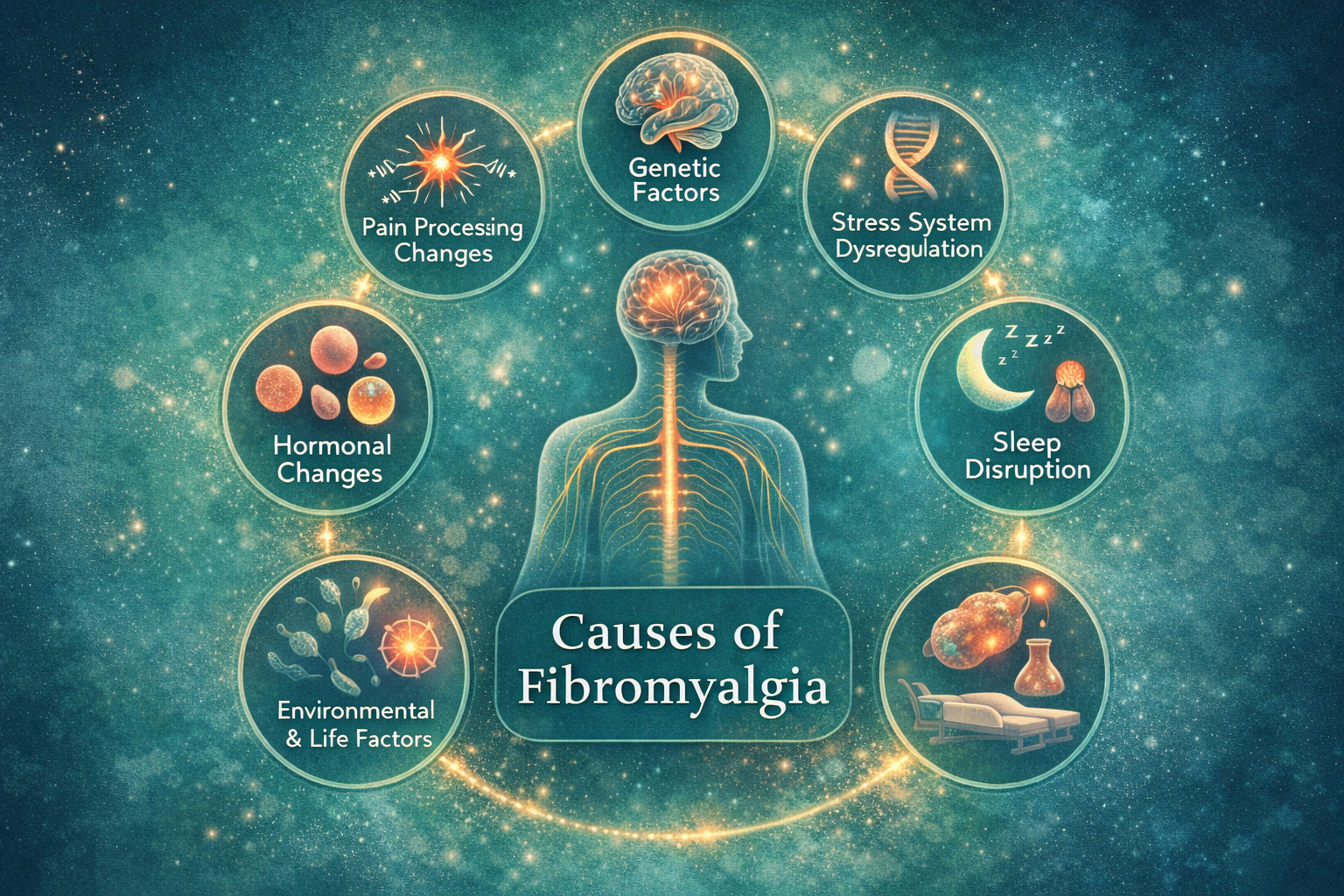
The honest answer from modern medical research is that fibromyalgia does not appear to have a single cause. Instead, scientists believe it develops from a combination of factors that affect how the brain and nervous system process pain and stress signals throughout the body.
Fibromyalgia is now widely understood as a disorder of pain regulation and sensory processing, often described in medical literature as nociplastic pain — pain that arises from altered nervous system function rather than clear tissue injury.¹
In other words, fibromyalgia is not imagined, exaggerated, or “all in your head.” It reflects real changes in how the body processes signals related to pain, fatigue, sleep, and sensory input.
Understanding these underlying contributors can help people make sense of their symptoms and begin to approach healing in a more informed and compassionate way.
1. Changes in Pain Processing in the Brain and Nervous System
One of the most consistent findings in fibromyalgia research involves the way the central nervous system processes pain.
Brain imaging studies show that people with fibromyalgia often have heightened sensitivity to pain signals, meaning the brain reacts more strongly to sensations that might not be painful for others.²
Researchers call this process central sensitization.
When central sensitization occurs:
• normal sensations may feel painful
• painful sensations may feel more intense
• pain may spread throughout the body
• the nervous system becomes more reactive
The brain essentially becomes better at detecting pain signals and worse at filtering them out.
This helps explain why people with fibromyalgia can experience widespread pain even when scans or lab tests do not show obvious tissue damage.
2. Genetic Predisposition
Fibromyalgia appears to run in families more often than would occur by chance alone.
Studies suggest that genetic factors may influence how the brain processes pain, stress, and neurotransmitters such as serotonin, dopamine, and norepinephrine.³
These chemicals play important roles in:
• mood
• sleep regulation
• pain perception
• stress responses
Having a genetic vulnerability does not guarantee someone will develop fibromyalgia, but it may increase the likelihood when other life factors are present.
Think of genetics as a predisposition rather than a destiny.
3. Dysregulation of the Stress Response System
Another area of active research involves the body's stress-response systems, particularly the hypothalamic-pituitary-adrenal axis (HPA axis) and the autonomic nervous system.⁴
These systems regulate how the body responds to physical and emotional stress.
In fibromyalgia, studies suggest these systems may become dysregulated or overactive, which can lead to:
• heightened pain sensitivity
• fatigue
• difficulty recovering from stress
• disrupted sleep patterns
• nervous system hyper-reactivity
This does not mean fibromyalgia is caused by stress alone.
Rather, chronic stress may contribute to changes in how the nervous system functions over time.
4. Sleep Disruption
Sleep problems are extremely common in fibromyalgia and may also play a role in the development of the condition.
Research has shown that many people with fibromyalgia experience disruptions in deep restorative sleep, which is essential for tissue repair, immune function, and nervous system regulation.⁵
When deep sleep is impaired, the body may become more sensitive to pain signals.
Sleep disruption can also worsen:
• fatigue
• cognitive symptoms (“fibro fog”)
• mood changes
• pain sensitivity
Some researchers believe poor sleep may be both a contributing factor and a result of fibromyalgia, creating a cycle that reinforces symptoms.
5. Immune and Inflammatory Factors
Although fibromyalgia is not classified as a classic autoimmune disease, emerging research suggests that immune system activity may play a role in some people.
Recent studies have found signs of:
• neuroinflammation (inflammation in the brain and nervous system)
• altered immune signaling
• changes in pain-related antibodies in certain patient populations⁶
This area of research is still developing, but it supports the idea that fibromyalgia is a complex whole-body condition rather than a purely psychological disorder.
6. Hormonal and Neurochemical Changes
Fibromyalgia has also been linked to changes in certain brain chemicals that regulate pain and mood.
Studies have found differences in levels of neurotransmitters such as:
• serotonin
• dopamine
• norepinephrine
• glutamate
• substance P⁷
These chemicals influence how pain signals are transmitted and interpreted by the brain.
When these systems are out of balance, pain signals may become amplified.
7. Environmental and Life Factors
For many people, fibromyalgia appears to develop after a combination of biological vulnerability and life stressors.
Researchers often describe this as a multifactorial condition, meaning several influences interact.
Possible contributing factors may include:
• infections or illness
• physical injury
• surgery
• prolonged physical stress
• trauma (physical or emotional)
• chronic sleep deprivation
• repeated pain conditions
These experiences do not necessarily cause fibromyalgia on their own, but they may contribute to changes in the nervous system that eventually lead to symptoms.
What This Means for People Living With Fibromyalgia
One of the most important things to understand is this:
Fibromyalgia is not a personal failure.
It is not caused by weakness, laziness, or a lack of resilience.
The condition appears to develop through a complex interaction of biology, nervous system regulation, genetics, and life experiences.
For many people, simply understanding this can be deeply validating.
And while researchers continue working to understand fibromyalgia more fully, many people are discovering that symptoms can improve when they address the systems most affected by the condition, including:
• nervous system regulation
• sleep quality
• nutrition
• gentle movement
• stress recovery
• pacing and energy management
Healing rarely happens overnight, but it can happen. Understanding your body’s underlying biology can be an empowering place to begin.
A Note From Lived Experience
After living with fibromyalgia for more than 25 years, I still remember what were considered to be the causes for my developing fibromyalgia: (1) genetic disposition (my mother has fibromyalgia and chronic pain) and (2) environmental and life factors (car accident), and who knows what else may have contributed to my getting fibromyalgia.
Over the years, I have come to believe something important:
Understanding the science behind fibromyalgia not only explains the illness but also guides the path toward improvement and living and feeling better.
I have adjusted my lifestyle based on emerging research around nervous system health, nutrition, sleep, and movement. These changes have made a meaningful difference in my own symptoms.
Fibromyalgia may be complex, but that complexity also means there are many potential pathways for improvement.
Sources
International Association for the Study of Pain (IASP). Nociplastic pain concept.
Clauw DJ. Fibromyalgia: A clinical review. JAMA. 2014.
Arnold LM et al. Genetics of fibromyalgia. Arthritis Research & Therapy.
Häuser W et al. Pathophysiology of fibromyalgia. Nature Reviews Rheumatology.
Moldofsky H. Sleep disturbances in fibromyalgia. Rheumatic Disease Clinics.
Goebel A et al. Fibromyalgia autoantibodies research. Journal of Clinical Investigation.
Russell IJ. Neurochemical abnormalities in fibromyalgia.